
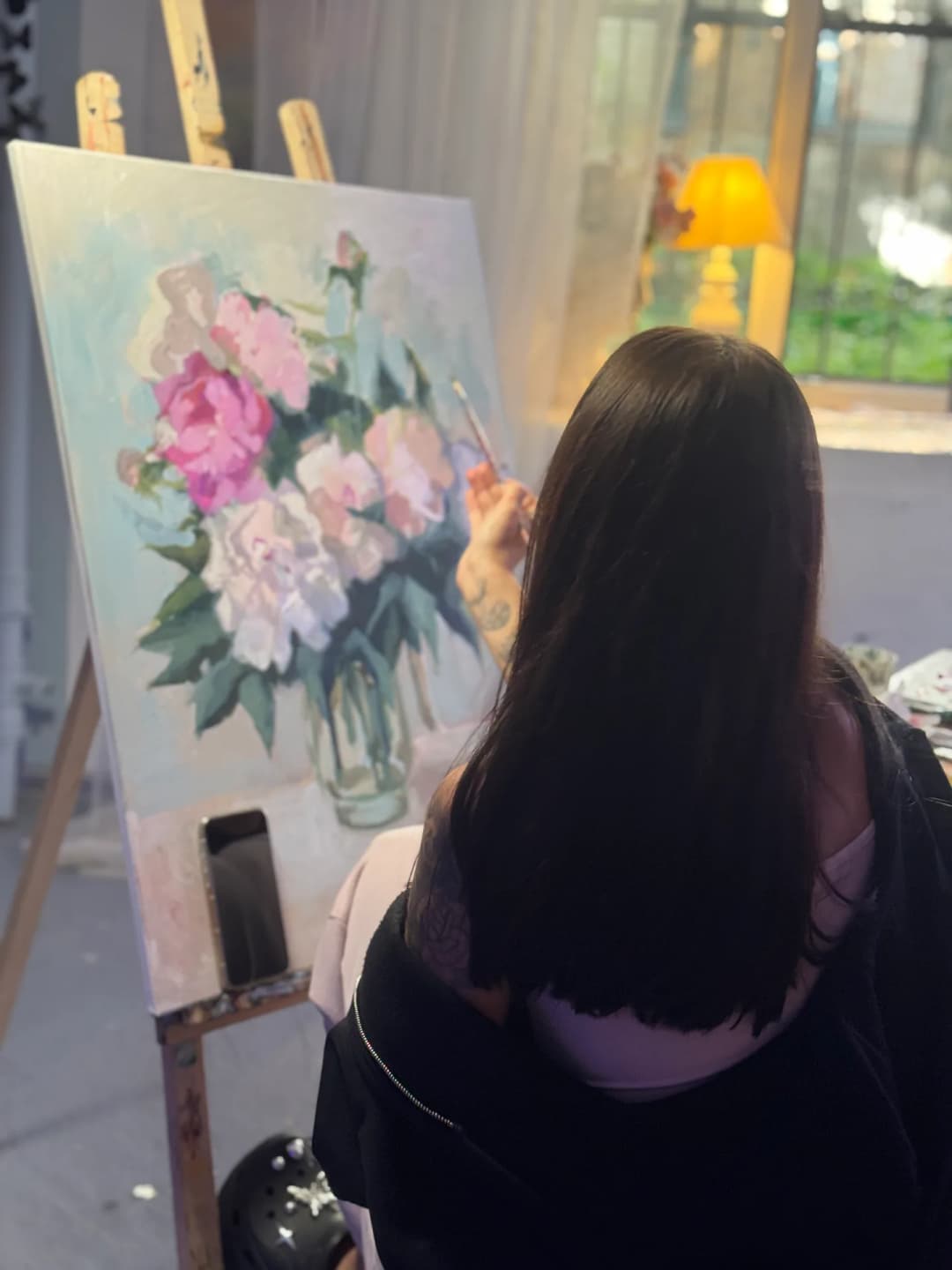
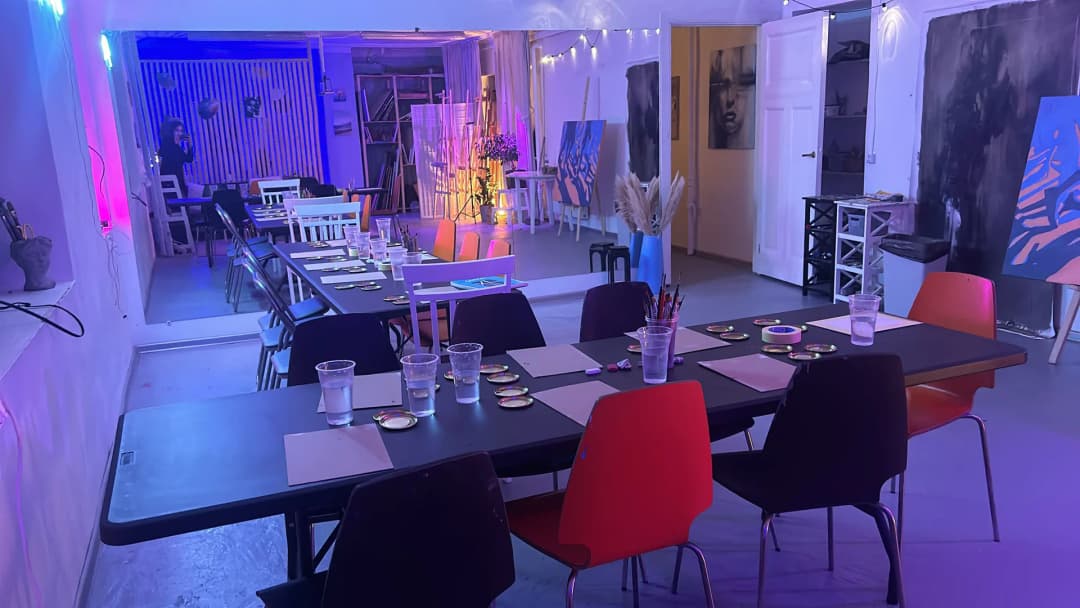
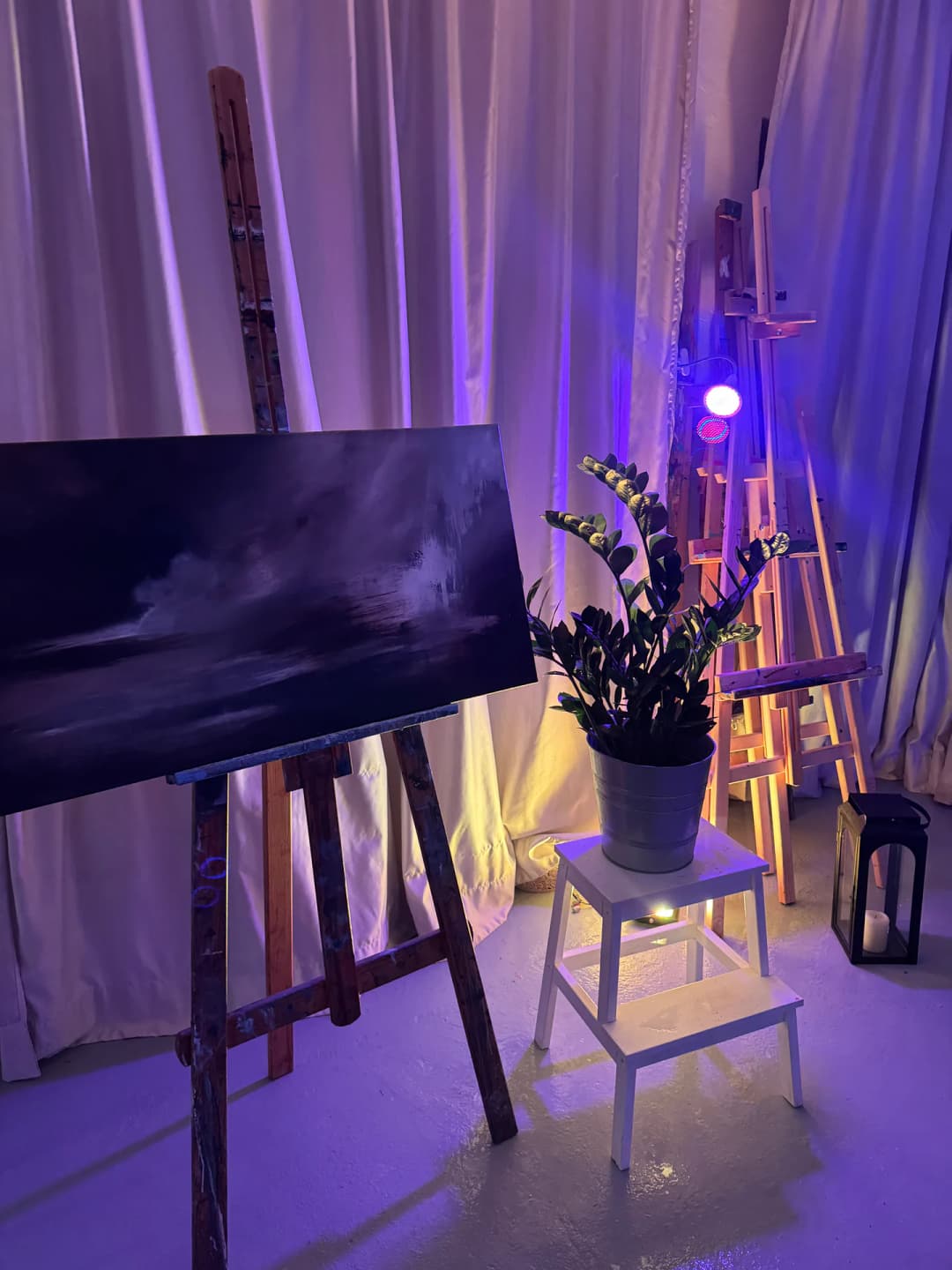
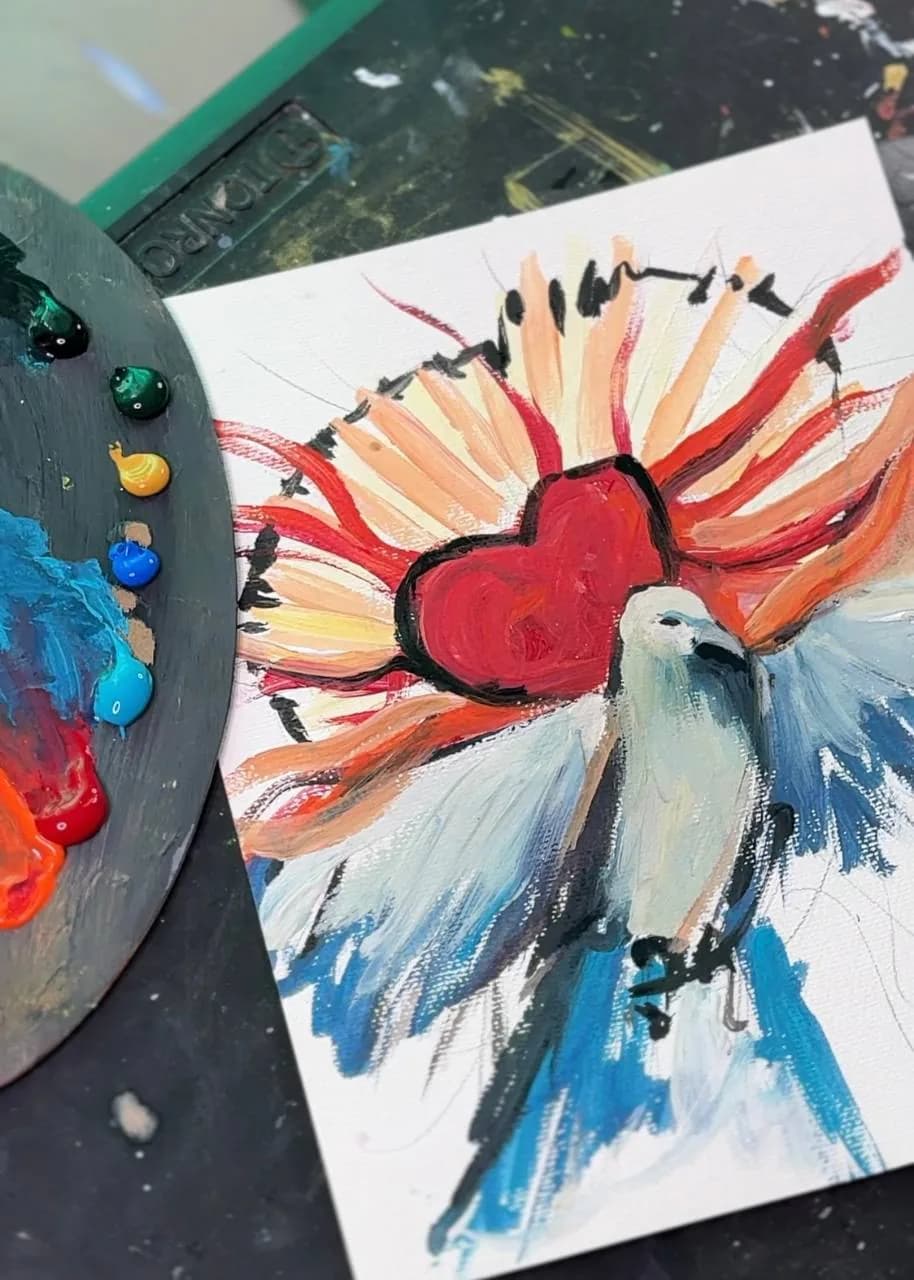
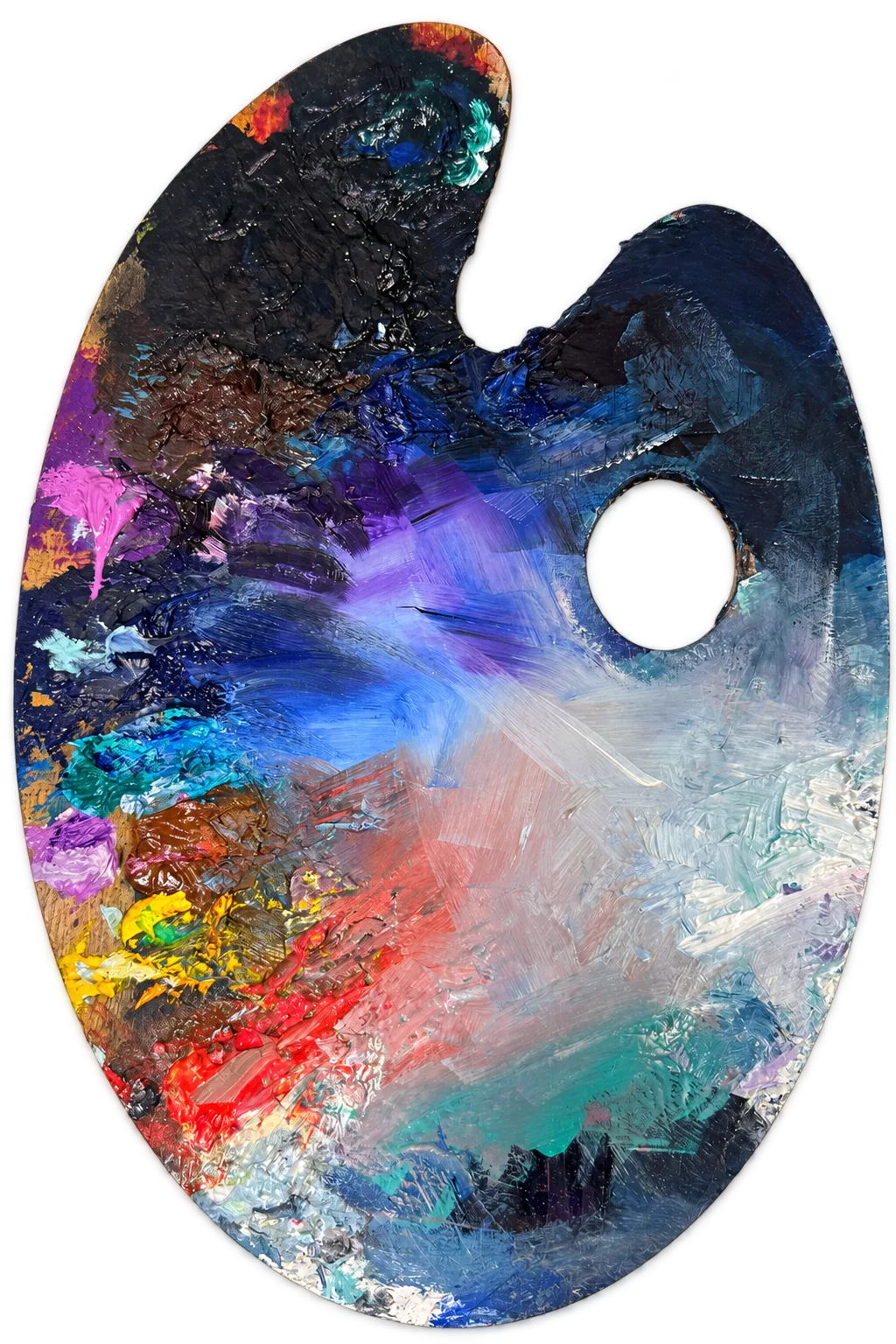
Come with a first thought, a half-finished sketch, or simply the feeling that you want to make something. If the idea is not there yet, we do not force it in five minutes; we look for it together through images, materials and conversation.

Miera iela 17, RigaPainting classes for children & adults
PAINT. EXPERIMENT. GET INSPIRED.You do not need to know the whole way. It is enough to see the next step.
Ideas made into work.
Every work begins differently — with a sketch, a colour, a question or an image worth exploring. This is a place to explain more about the painting process, how an idea develops, and how a work changes from its first impulse to a finished painting.Learn more about the teaching approach
ADULT WORK
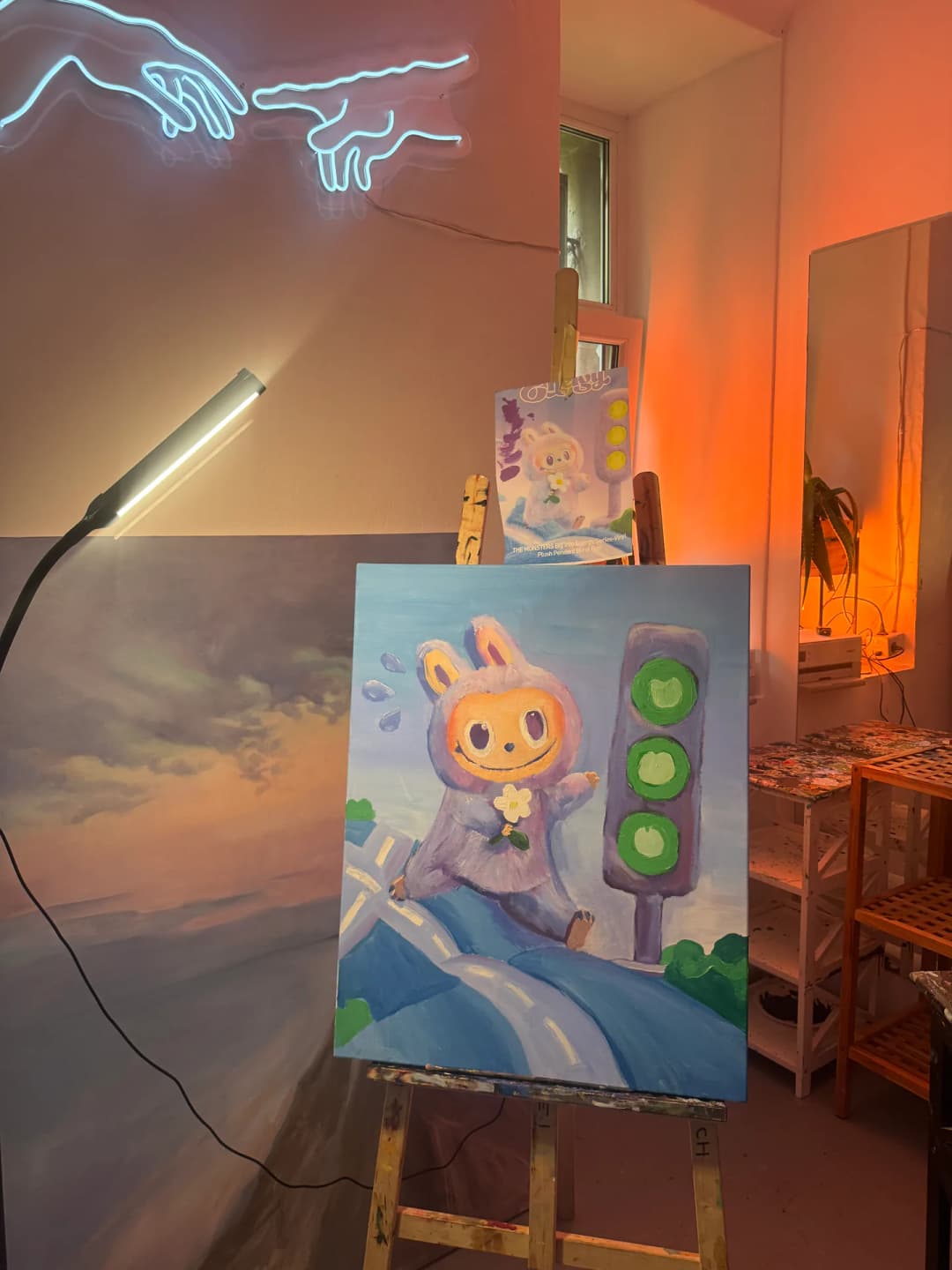
Adult work — from first experiments to personal projects developed over time.
1 / 6
CHILDREN & YOUTH WORK
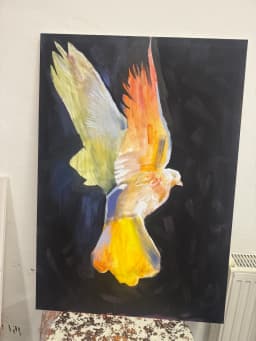
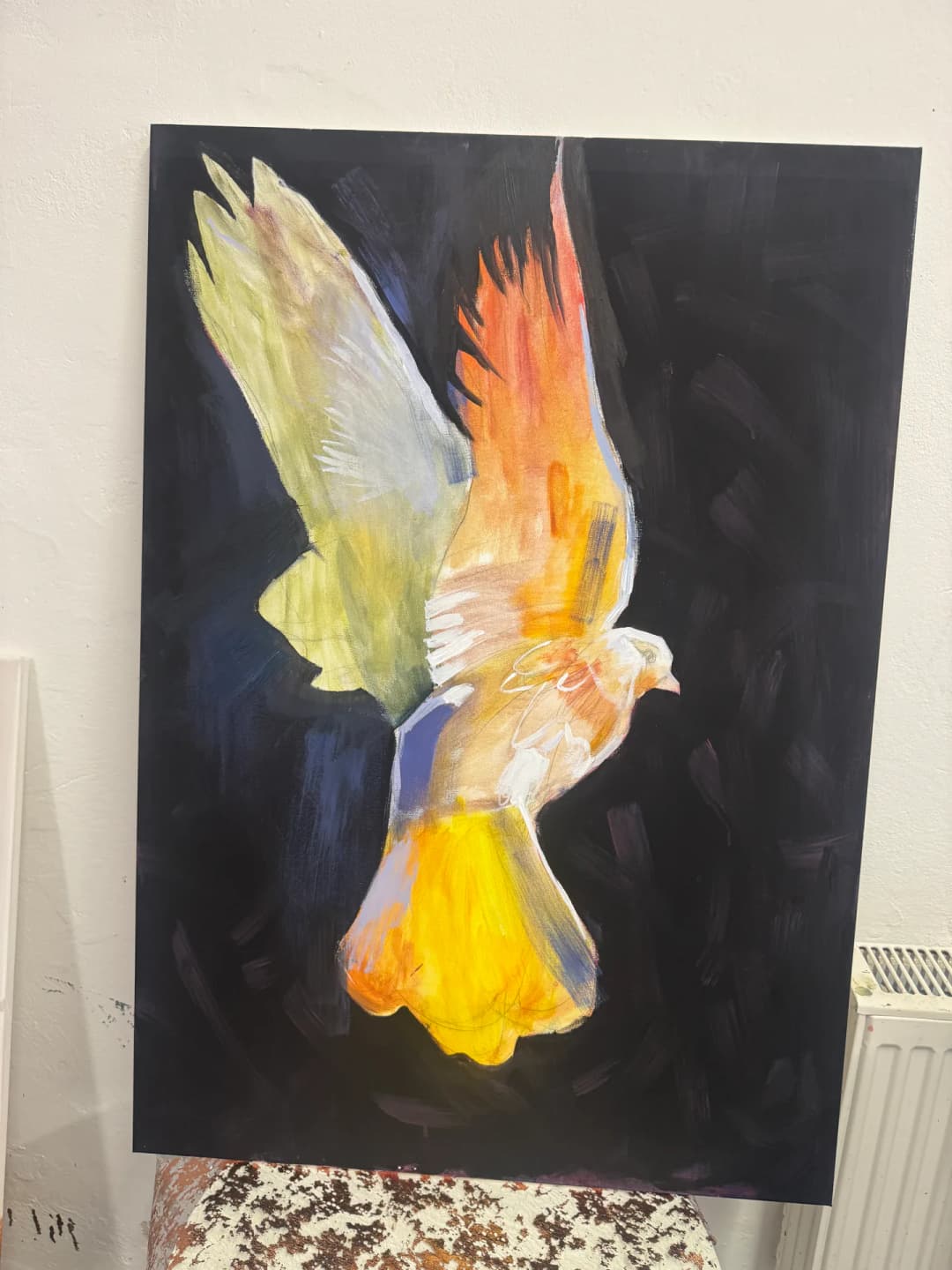
Work by children and young people, led by their own choices, interests and visual language.
1 / 6
Get to know us
Who teaches and how we work
01STUDIO DIRECTOR & TEACHER
STUDIO DIRECTOR & TEACHER
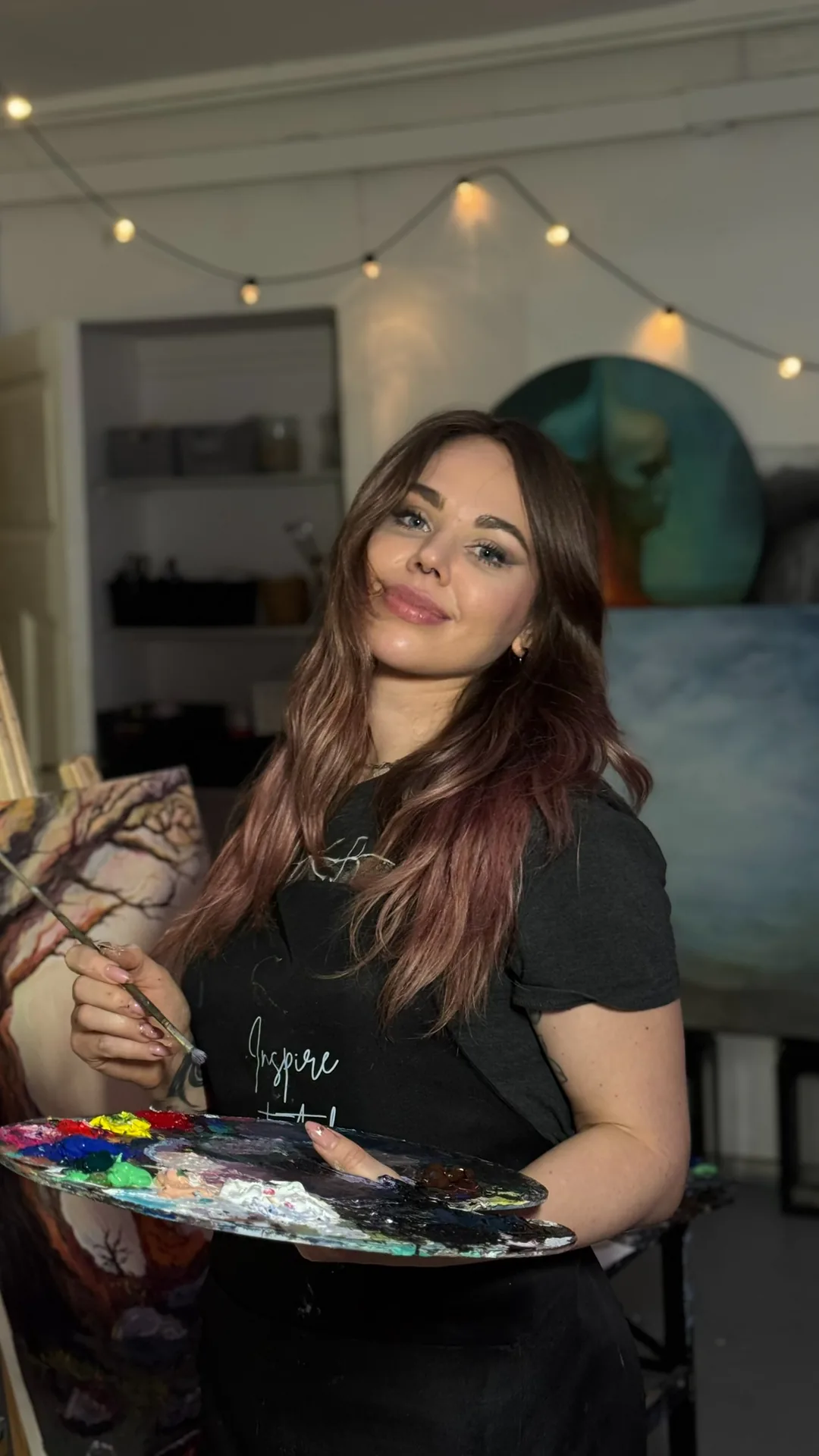
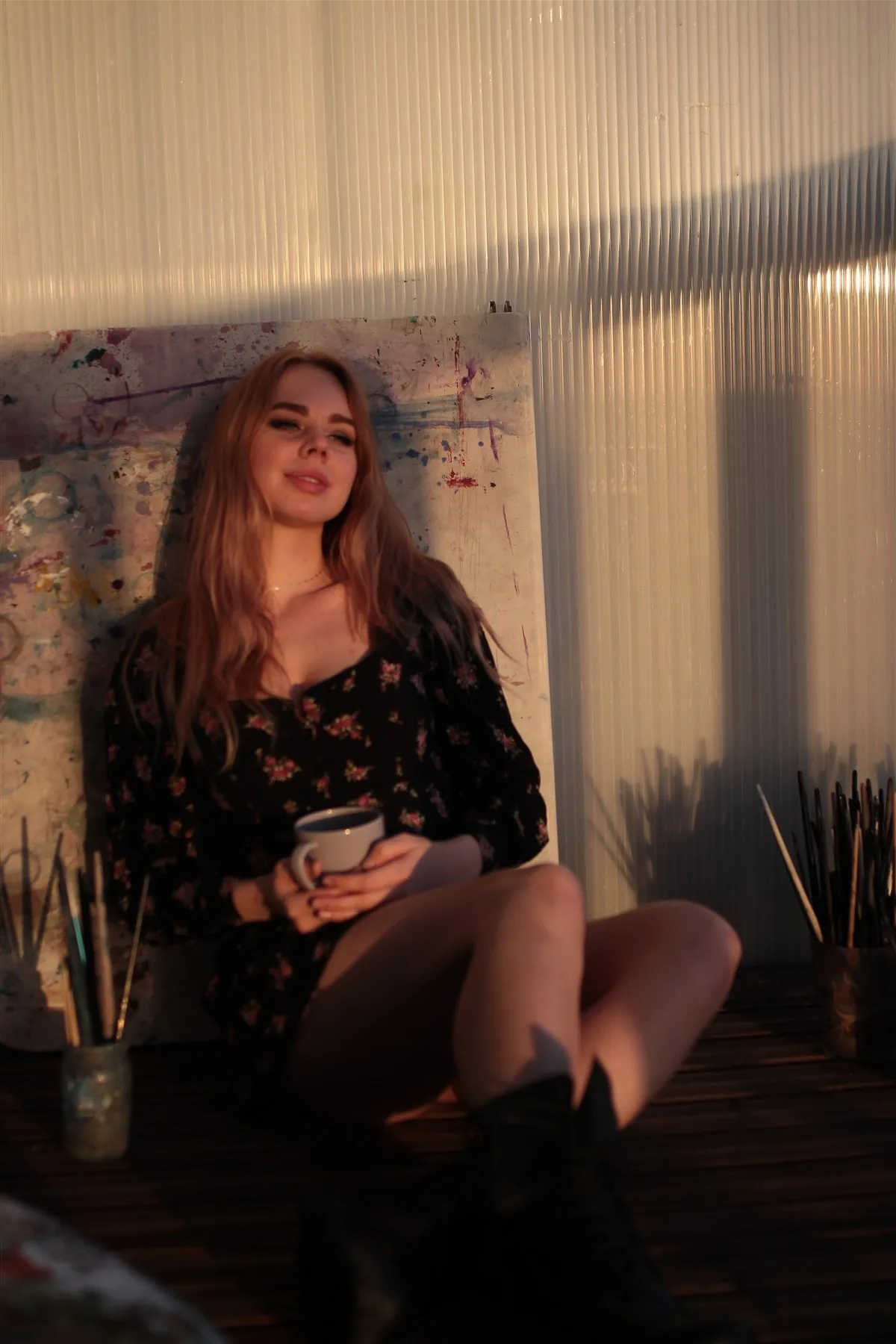
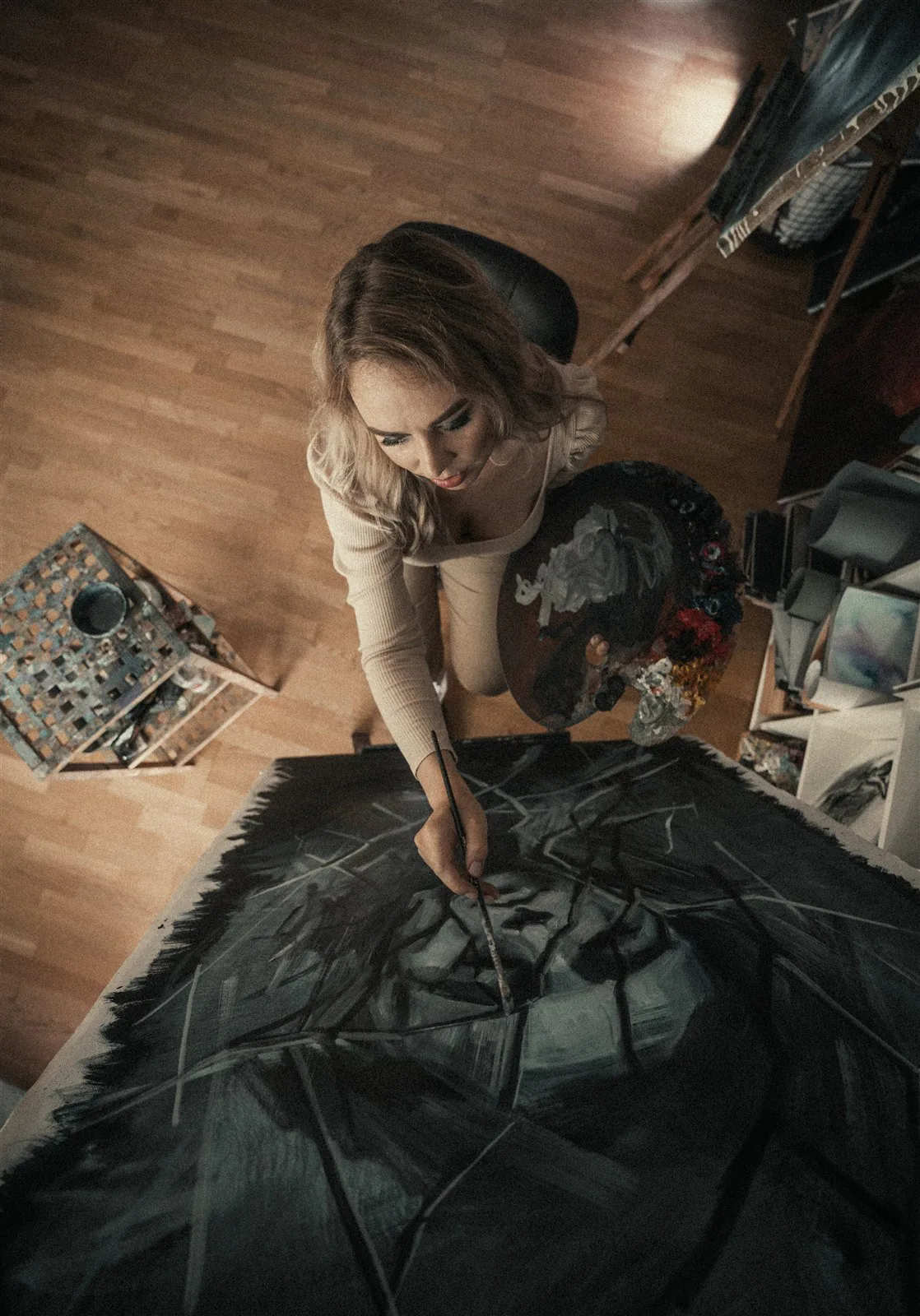
Sandra Rudzīte
Painting has been part of her life for 18 years — and her love of art still refuses to let go.
Sandra Rudzīte’s paintings often let the figurative and symbolic become an inner landscape: a figure, animal, still life or darker light is not decoration, but a way of holding attention on a feeling. She works between close observation and invention — in oils, drawing, acrylics and watercolour — without rushing a work that needs time.
Although her work often carries darker, heavier or symbolic subjects, Sandra herself is light-hearted, happy and curious: the studio has room for laughter, tea, and a painting of a sweet cat. She works freely across genres, and one of her small guilty pleasures is painting cute cats.
Her experience spans Adobe, online art projects and the daily life of a working studio; in teaching, the essential thing is simpler: helping someone see what they are already trying to say in an image.
VIEW SANDRA’S ARTWORK
02OUR APPROACH FOR ADULTS
How we think
A place to take an idea all the way into a work.
In adult life, creativity often returns not as a hobby but as a need to hear your own way of looking again. This is a place to learn, recover your hand, change direction, or finally give time to an idea that has been waiting. You do not have to choose between freedom and skill — both can grow together.
You do not have to look like an artist to begin working like one.
From the first class we work with real materials and real decisions. Composition, colour, drawing and technique come in when a particular work needs them—not to tick off a programme.
Children, teenagers and adults do not have to fit into one style. A careful academic drawing, an intuitive painting, a comic, a still life or a surreal scene can all belong here. We help you notice what is already yours.
Symbols, difficult feelings, monsters, flowers, pop culture or complete absurdity are all valid material. A darker work does not mean a gloomy room. There is tea, awkward first attempts, and room to laugh.
Painting can make recurring themes easier to notice, but we do not diagnose or interpret people from the outside. If talking helps choose an image, colour or next step, we talk. If quiet work is what you need, that is completely normal too.
Oil, acrylic, watercolour, drawing and collage are not identities to choose for life. We try what gives a work the texture, pace and light it needs. Materials are here, so the choice can be practical rather than theoretical.
You do not have to think smaller because there are many questions at the beginning. Work can grow into a large interior canvas, a series, a portfolio, or a single piece that needs time.
A beginner is someone who has not yet learned to trust their eyes and hands. That is a good beginning. You do not need a polished vision or an apology for what you cannot do yet.
We can work over time with drawing, observation, composition, colour, a portfolio or an individual project. We look at art books and discuss not only how to paint, but why this particular image matters.
There is room for concentrated work here, without having to perform being a ‘real artist’. You can ask very practical questions, change your mind halfway through, or simply come to recover a creative rhythm.
03OUR APPROACH FOR CHILDREN & YOUTH
HOW WE WORK
Children and young people
already have taste.
We take it seriously.
We work through attention, choice and materials that are within reach — an approach related in many ways to Montessori principles. A child does not need to fit one model. Their taste, pace and strange idea are worth time; our job is to offer skills and room for them to grow.
An unusual colour choice, image or interest can be an important starting point. We help each person notice what genuinely holds their attention.
Creativity grows in the safety to try, make mistakes and discover. There is no need to get it “right” on the first attempt.
Drawing, composition, colour and materials come in when they help an idea become stronger. Rules are tools, not limits.
There is room here for bigger works, portfolio ideas and bold themes. Their point of view deserves time, attention and a thoughtful conversation.
An idea can begin as a small drawing and grow into a painting, series or portfolio work. We help students see when it is worth developing a work rather than immediately starting another one.
Children meet paint, pencil, charcoal, watercolour, acrylic and collage—not one supposedly correct technique. A material can give an idea its direction.
We look through art books, artists and images that catch our attention. This teaches closer looking and gives students words for their own ideas.
An awkward line, accidental colour or changed plan is not a reason to throw a work away. We learn to notice what the work itself suggests doing next.
When a young person needs a more focused direction, we can work on portfolios, assignments, observational drawing and confidence in their work—without needless competition.
The finished work is not the only thing that matters. We share what a child is working on and what they are learning to notice, choose and complete.